
All my life, people have told me that I am special, unique, smart, and going to conquer the world one day. In the American evangelical context, the more unique and interesting someone’s testimony of coming to Christ, the more cache the person has. The music I listened to, the books I read, and the movies I watched were filled with stories of interesting individuals who were 1/1s.
Everyone seems obsessed with being as original as possible and can't see how that's destroying their souls and our community.
The Hobby of Travel and the Shame of Being Boring

If you are blessed enough to avoid trying to find a spouse in the year of our Lord 2026, then you will not understand the apparent obsession that singles place on visiting every Instagrammable destination on the planet. Whether you are swiping through dating app profiles, scrolling through social media, or talking in person, the topic of travel is bound to be front and center in ways it was not when I was growing up.
Growing up, people would “backpack through Europe” or visit Southeast Asia to “find themselves” after a summer or a year abroad, and would return with experiences and memories to share. Travel now has morphed into an ever-present pursuit of the “hidden gem” that can never be satisfied, no matter how many places you check off of your list. Travel is something people often list as a “hobby” despite having little in common with other hobbies such as cross-stitching, hiking, or fishing.
Why are people seemingly so obsessed with traveling to see as much as possible? Well, you could try and blame the internet, but I don’t think that’s the proper cause. There seems to be a stigma of being “boring” or “uncultured,” and people (especially those suffering from white guilt) are running to escape by visiting as many diverse places as possible to build a resume for how cool of a person they are.
Never mind actually having a conversation about anything of substance on these credit-financed international excursions. Despite the costs associated with travel as a hobby and the underlying behavior associated with it, it would be otherwise harmless if travel were not an extractive industry.
Locals in tourist hotbeds like Portugal and Spain have taken to a quasi-guerrilla warfare campaign against foreign tourists who are driving up rent prices and making previously liveable communities far less so. While the governments understand that the dying economies of Europe need the revenue, they have not been able to find a proper solution, as the new tourist does not care about the place itself but what the place can do for their prestige as an individual.
How to Be a Pilgrim and Not a Tourist

The past two weekends, I’ve been checking off stadiums from my sports bucket list, and I have realized that sporting events might be the most obvious ways we can learn to move from being tourists to being pilgrims.
The Zillennial Recommendation: Travel is okay, and it is good to learn more about the world around you! But merely traveling across the country or around the world does not make a cultured individual. Millennials with iPhones who create short-form content have ensured that there are no more “hidden gems,” so stop looking for them and instead look to enjoy the world as it exists around you.
The Blandness of Modernity & Loss of the Vernacular
The inventions of air conditioning and microphones have done more to change our built environment than any other invention besides maybe the elevator. Air conditioning allowed us to build “custom homes” that don’t feature passive cooling features such as tall ceilings, doors and windows built to move airflow through a home, and reduced the need to sleep outside or sit on a large wraparound porch.
Central heating has changed similar features in the Northeast, and now homes are built based on the cheapest, easiest method as opposed to the vernacular needs as decided by climate. Has this made larger homes more affordable per capita? Of course! Many people are very deluded as to what our median forefathers were actually able to afford, but it has also homogenized our homes, office spaces, and retail shops not just by region but throughout the country.
Aaron M. Renn often talks about the “sunbelt culture” which has swept through the country where strip malls, SUVs, and subdivisions are the normal built environment, but this new built environment is basically homogenized across the developed world. All the while, we are being sold a bill of goods saying that we can have a “custom home” that is a 1/1 based on a number of things you can make different about it, but these end up looking quite garish as they are often out of sync with the places we put them in.
The microphone has rendered the traditional church building and music venue irrelevant. No longer is a congregation relying on the acoustics of a space to hear a pastor, organ, or choir, but instead can hear everything with the power of amplification. The beauty of harmony in a building designed to amplify the beauty of the human voice is replaced with a screen and projection system so that church feels more like watching a performance than participating in one.
While the technology makes building churches cheaper, as they can essentially be big, metal boxes filled with technology to make up the difference, it also means we lose the beauty of places such as Westminster Abbey, which is simply not good for the soul. This is something I reflected on briefly in my last article, and a part of the reason I am finding the house church experience enriching is that it does not view worship as a performance art since there is no stage. Yes, we have someone play a piano, and there are some microphones, but the intimacy of the setting means that they are basically unnecessary, and the microphones are leading from the front, not simply objects of attention.
The worst part about all of this is that most people have no idea why we even built churches the way we did in the first place! The flattening of our culture means we have less durable things to pass down to our descendants that are worthy of our defense. I can’t imagine that anything built after the year 2000 will outlive the Sistine Chapel, Hagia Sophia, or St Michael’s because there will be nothing worthy of preservation and protection.
You can say that this is okay because the hearts of man matter more than any building, which in some way is true, but the hearts of man are formulated by the world around him. If you grow up in poverty or without anything that is worth having, odds are you will have less respect and admiration for the world around you.
Replacing Culture by Turbocharging Tribalism
Culture is a very nebulous term in modern discourse. For many, “culture” is something Americans don’t have because we are “just white people.” All “culture” comes from “black or brown people” and is stolen by whites.
While that would be a pretty lukewarm take on Bluesky, this would obviously be inflammatory if you replace “white” with just about anything else. Have white Americans built on/grafted in cultural contributions from black, brown, and indigenous cultures? Of course! But to say that “white people have no culture” is one of those things that we throw around because we don’t actually understand what we are saying.
Take dancing, for example.


For some people, there is an idea that individual excellence in rhythm is sufficient to be considered “good at dancing.” But dancing as a cultural expression is not about excellence! It is about participation. Both white and black Americans brought with them cultural heritage dances from abroad that evolved into several uniquely American styles of dancing that are basically dying out as they have been replaced with the virus of originality.
Gone are the days of being able to go with the flow in a square dance, line dance, or contra dance, as you are now thrown to the lions at a bar, nightclub, or dancehall and hope you can impress someone with whatever moves you picked up from TikTok or Fortnite (if people are dancing at all).
Obviously a bit extreme, but as we have moved from culture as an expression of who we are as a group to something we do for individual pleasure, we have forced ourselves to contort ever more into being original, which only makes people who have a hard time being seen fit in. It is much easier to slot an introvert or autistic person into a line dance where everyone else is doing the same thing because they can pick things up by mimicry.
If you are not gifted at whatever individual expression is put on display, you are probably going to fail, and in the age of Tikok/Instagram, your individual failure is only magnified.
What is dancing without music? While Huey Lewis & The News might think it is, “Hip to Be Square,” most people would say that good music is all about being original and authentic. We tend to put our vernacular music into labels such as “classics” or “folk” or specifically “Americana,” even tho that would be seen as just music a few generations ago.
The invention of the microphone and the radio shifted music away from being something that tells a story or is good for dancing, and into a performance art that highlights the best of human achievement or a playground for human experimentation. Is that always a bad thing? Of course not. We’ve had some incredible vocal talents that fall into these categories, but we’ve also lost a common culture of music that can be made for dancing for a specific culture.
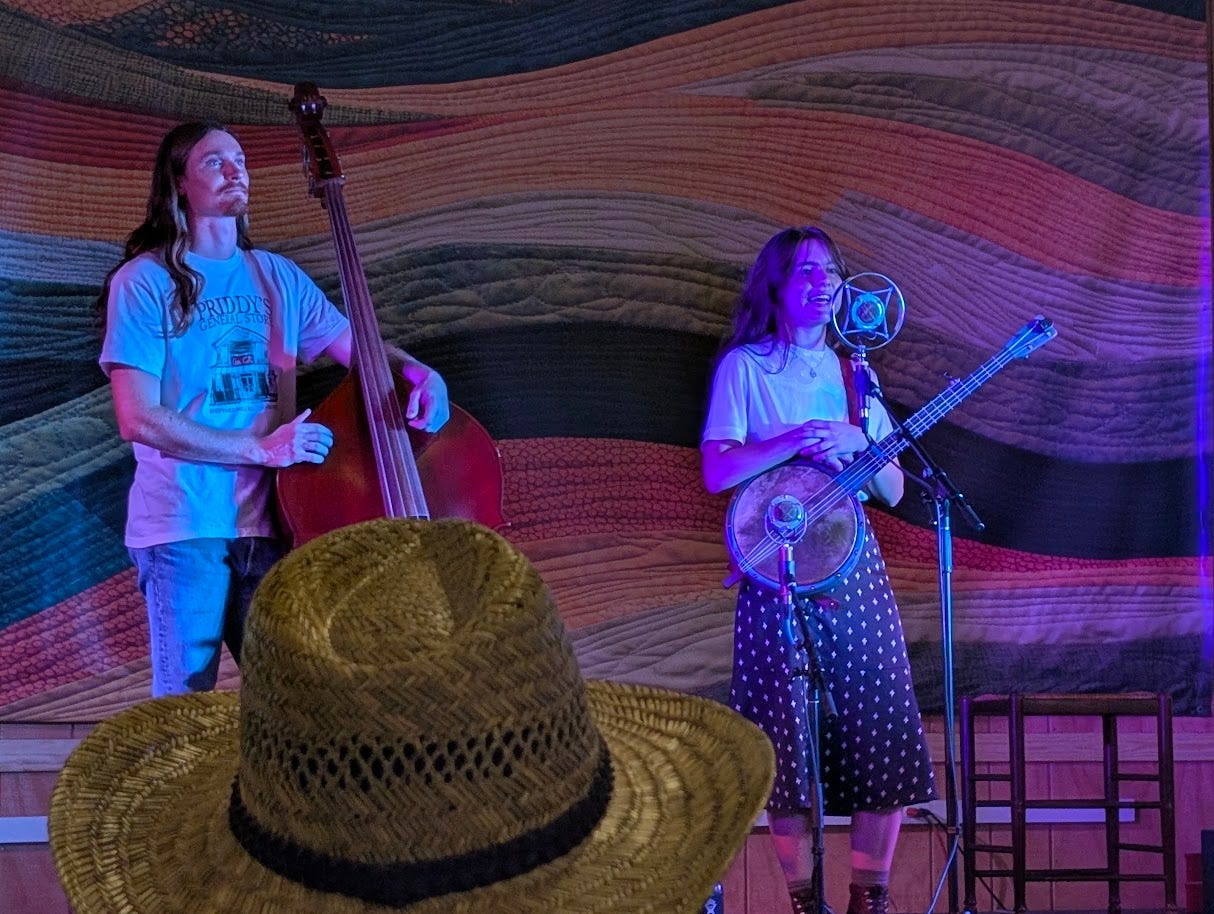
“Old-timey music” exists because it was made to have a specific pace for dancing and allow a large number of musicians to play at the same time. Bluegrass was created to take the sound, tweak it, and focus on virtuosos of instruments like the mandolin, banjo, and fiddle with a penchant for long solos.
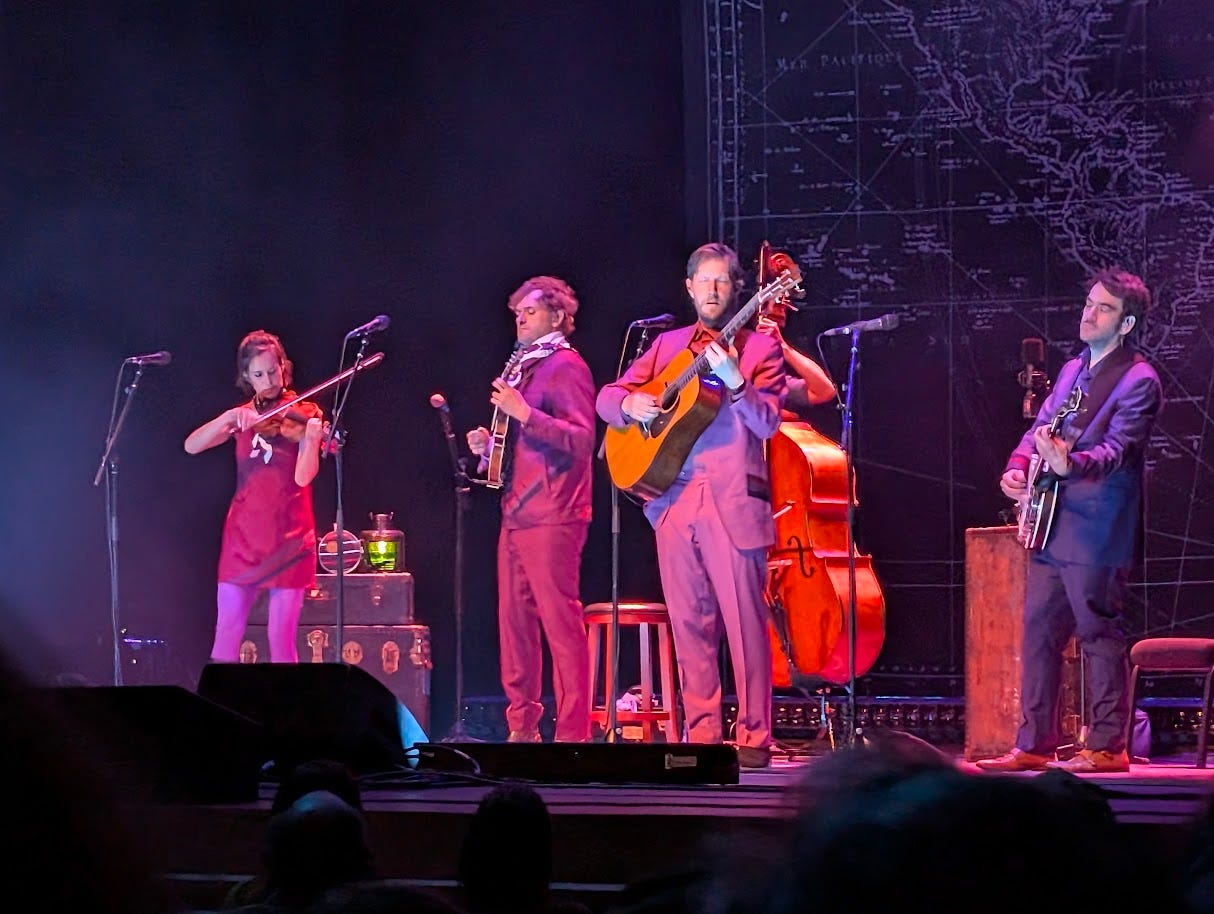
All of these factors, in combination with how we are increasingly fractured in experiencing them (personalized algorithms and an increasing number of genres), mean our shared culture is evaporated into small tribes. There was a time when everyone knew the number 1 hit song in America even if they didn’t like it because of how music was distributed and our culture was still somewhat united. While Ella Langley’s Choosing Texas (which I love as an ‘Ella Fella’) has broken records for its time atop the charts, it is not a ubiquitous experience as past earworms have been.
You might be asking, “Zeke, this might make sense, but how is this turbocharging tribalism? Tribalism is bad, and this just sounds like your opinion!” Well, music is not something that is mere performance. Music has the power to change our thoughts on issues and has always had a history of telling stories.
Humans are storied creatures. Without stories, we cease to be human, and the stories that bind us together are what make up our culture. As music, dancing, movies, art, books, and clothing lose their cultural coherence, so do we as a people. If everyone does something different than everyone else, they cease to be a people bound together by something other than their citizenship.
Obviously we all have our different tastes, but for thousands of years people have existed in cultures that at least painted within the lines of what made each other different. Now, you have people who might as well be living in complete contrast to each other and are expected to feel united because they live in the same geographical area.
Madness!
The Zillenial Recommendation: I am not saying that everyone has to return to listening to the same ten songs on the radio, but I think it is at least fair to acknowledge that our fracturing media and cultural landscape is quite odd when compared to the rest of history. People (especially Gen Z) often complain about “nepo babies” in music and film, but unless you support your local artists, you will never see new talent rise to the top! I also think that America as a nation-state spanning the Lower 48 has never been truly cohesive culturally, but it used to be that scenes of certain music types were local (at least in creation, if not also consumption). Think Seattle Grunge, Mississippi Delta blues, Chicago Drill, Kentucky Bluegrass, or New England maritime music. Post-internet, people consume whatever is popular, and there is no longer cohesion to anything! Support local and support it often!
At the end of the day, the goal of culture is to assimilate people by having a “normal” that people can orient themselves around, and the majority of people will fit in that middle while others will exist on various levels of “fringe.” Our modern culture seems to appreciate an inversion where the fringe is seen as the ideal, and the people who are happy to just “fit in” are derided despite that being the human cultural norm. Leave a comment and let me know if I got this one right!
Interesting piece. Wrestling with the big concepts of Individual vs the collective. The extremes of both are destructive to the group and individual.
You are right, with social media excentuating the interesting things and people over the bland gives the illusion that everyone needs to be interesting.
As a Podcaster, I notice the more interesting my guests are the more views I get.
I think you're right that we lose a heritage when beautiful churches and local communities get replaced by drabber options.
I would push back on some of what you wrote, I think people want and need to feel significant and important. Take as old as time, yes I know. I think audiences in the golden age of film and now a days, want to see glamour, far of places and “something interesting“ because the drab internal and external things in their lives.