
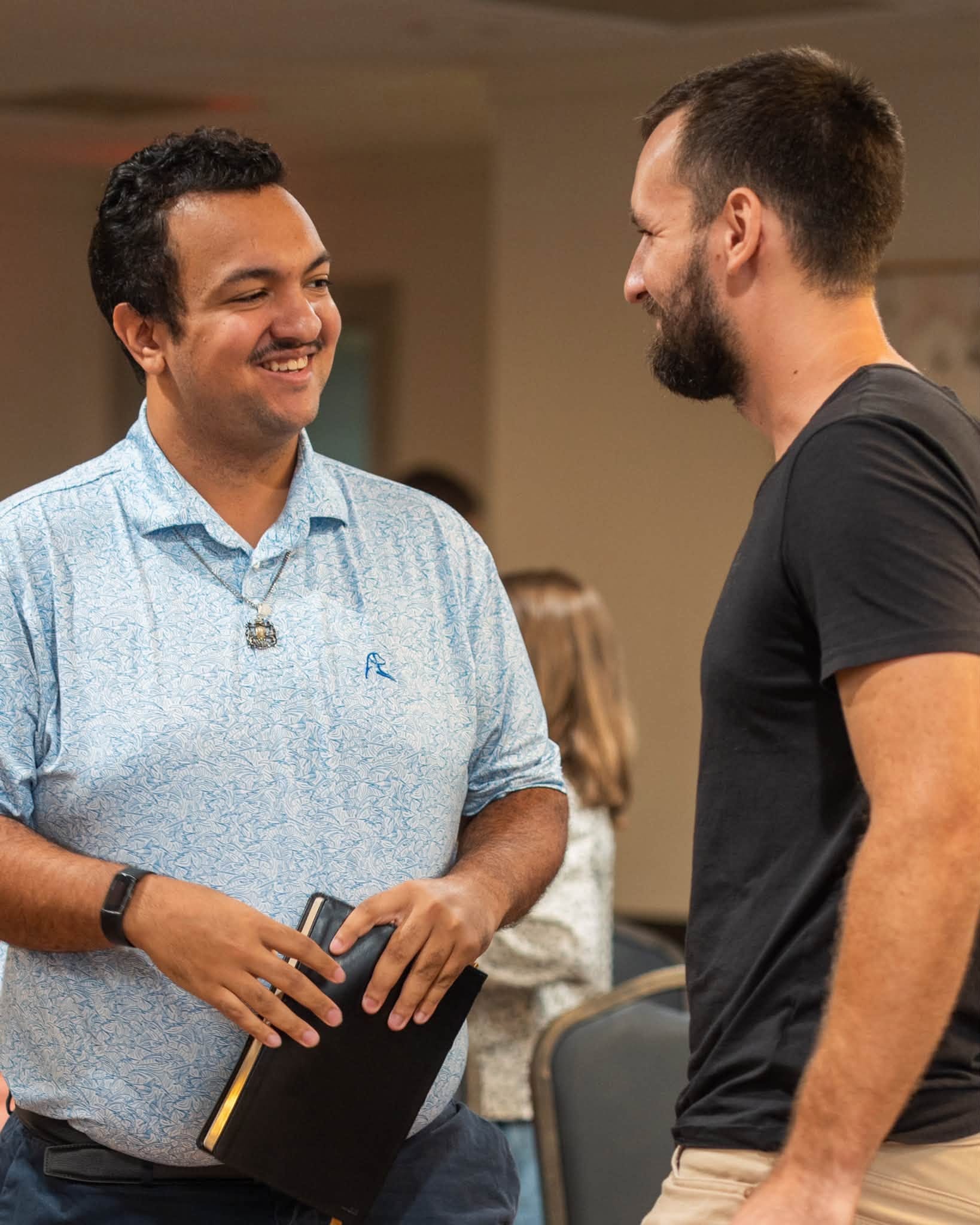
While I’ve never dealt with the plague of deconstruction that swept many millennial and gen-Z christians growing up in the 00s-10s, it wasn’t until June of this year that I was regularly attending in-person church services for the first time since high school. After spending several months with a wonderful new church family, I have gained insights I hope will help anyone interested in how we build stronger communities as both Americans and Christians.
The Importance of Being In-Person
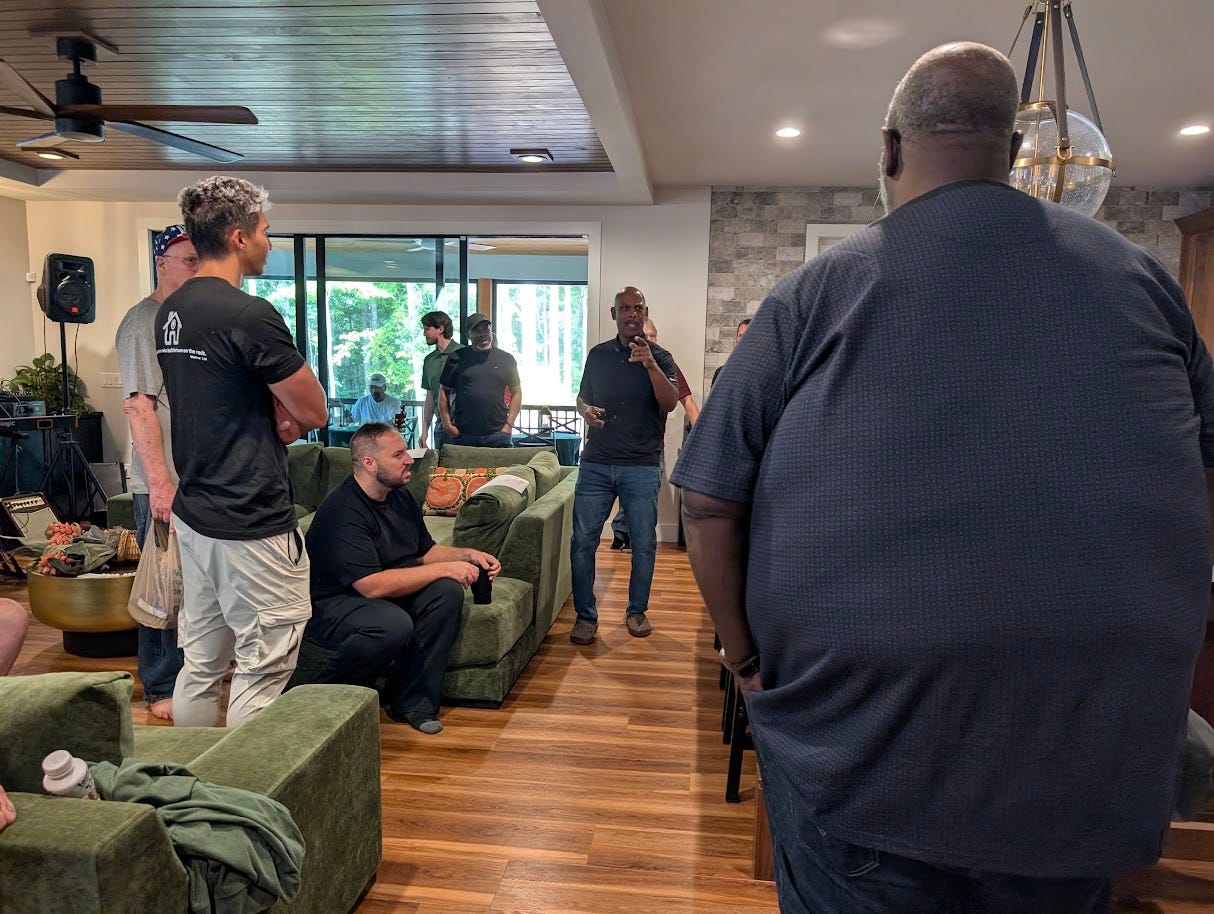
COVID permanently changed how I and many others interact with people in many detrimental ways. Previously, doing things remotely would not only seem inferior, but also rude and often less preferable. Why would you want to miss out on the benefits of socialization and in-person experience by staying at home?
I know that if it were not for my ex-roommate Hassan, I would have been content to stay home and miss out on several memories I will likely have for life, because he wasn't content to let a lack of proximity stop him from experiencing the best life had to offer.
I come from a charismatic, non-denominational family that does not celebrate Christmas, which makes me about as ordinary as a pig with angel wings. Even as my personal spiritual journey has taken me in places I never would have fathomed before, I have increasingly realized that the heart of Christianity is less about arguing over fine-grained points of theology and more about being in literal communion with the body of Christ.
Thanks to a local Facebook group, I found my current church home (Abiding Church), which has been extremely welcoming, helpful in my spiritual growth (theosis), and a great place to study how people who don’t have Substack grapple with these sorts of things.
Even tho I’ve had some great digital spaces to learn new things or increase in my faith, it wasn’t until he said “just go to church” in one of his many YouTube videos that I realized, “wait, I can do things.”
This simple but necessary revelation has realized the very obvious shortcomings of the digital world. Everything you say is logged for a future person to hold against you or reference when you do right or wrong. You can’t experience the people you speak to in ways that humans have done for thousands of years. Your memories can be deep, but not as deep as the ones you’ll have from being in person. You can never be in communion with these people in the same sense as you can when you are physically with them.
This is key if your goal is to create future disciples of men or if you want to rebuild Christendom (a goal of the new religious left or the traditional right in 2026).
Building Disciples is Easier than Rebuilding Christendom
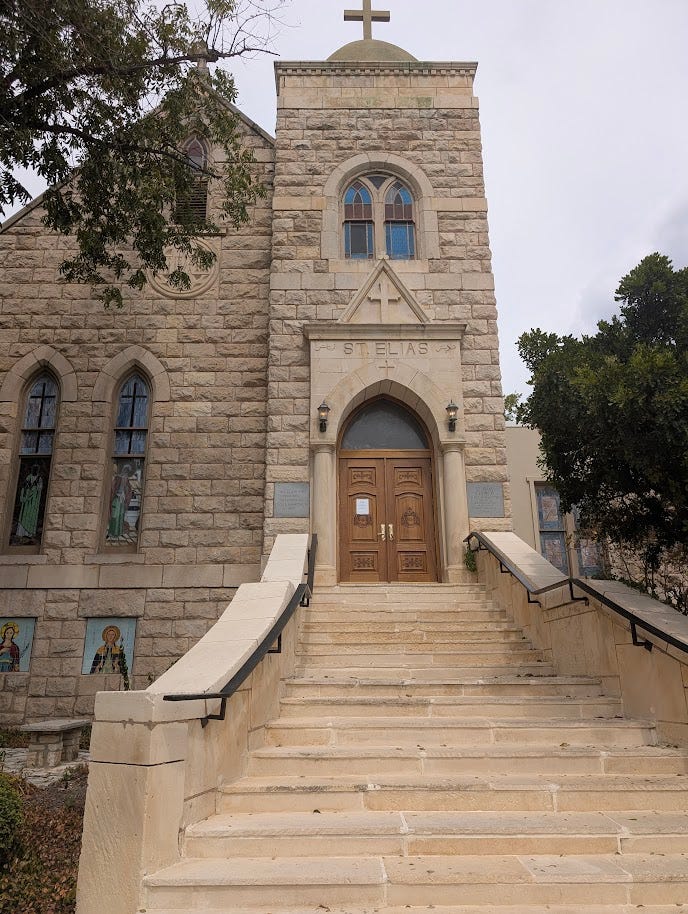
One of Christianity's main missions has been the “great commission”: to go out and make future disciples for Christ among the nations. While this goal sounds hard (winning hearts and minds is never easy), it feels infinitely more attainable than the political goals of a new Christendom in an age of secularity.
A friend of the stack Robin L Owen recently wrote a piece on the resurgent Christian Left in spite of the seeming death spiral that blue churches have been in the last 50 or so years. Notable figures such as James Talarico have built careers promoting a gospel friendly to modern sensibilities but generally alienating those with differing theological views.
The reaction to this movement on the right appears in groups such as the Communion of Reformed Evangelical Churches (CREC) and the Orthodox Presbyterian Church (OPC), which have become political bogeymen for those on the left looking to pin a tail on the donkey of the Christian far right. While they are far from mainstream popularity, they have appealed to large families and hard-working earners drawn to a positive vision of the world shaped by traditional Christian ethics.
Once again, without getting into the weeds of who is right and wrong, both projects contain a vision of the gospel as they see it and put this vision out to people who are receptive to it. Both groups have their detractors and supporters, but what both groups seem to miss is that their projects require enormous buy-in to ever attain a sort of "return to Christendom” or “Christian nationalism” that existed in the pre 1960s America.
While the left has never used this sort of language, there is a sort of obviousness that comes with promoting a term like “the religious left.” If you truly believe in something, you will do whatever you can to promote it as the default “truth” because why would you not? While the religious left might think they are simply finding common ground in a secular world with people who believe in helping the poor, needy, and disadvantaged, there are no such things as “secular values” as a moral neutral.
The world has never had a moral neutral devoid of a spiritual heritage, no matter what sorts of nonsense atheists seem to argue over the years. Humans have always existed in one form or another with a cultural framework that has formed their decision-making, and these frames have coexisted with us long before we came up with the ideas of “religious/secular distinction” in the Age of Enlightenment. Ask a person why they believe x idea on y controversial topic, and their answer is influenced by their culture/religion/mix of both.
We are not created to be independent of the places we inhabit, which is why how we worship changes our worship spaces.
Building Churches vs. Building Disciples
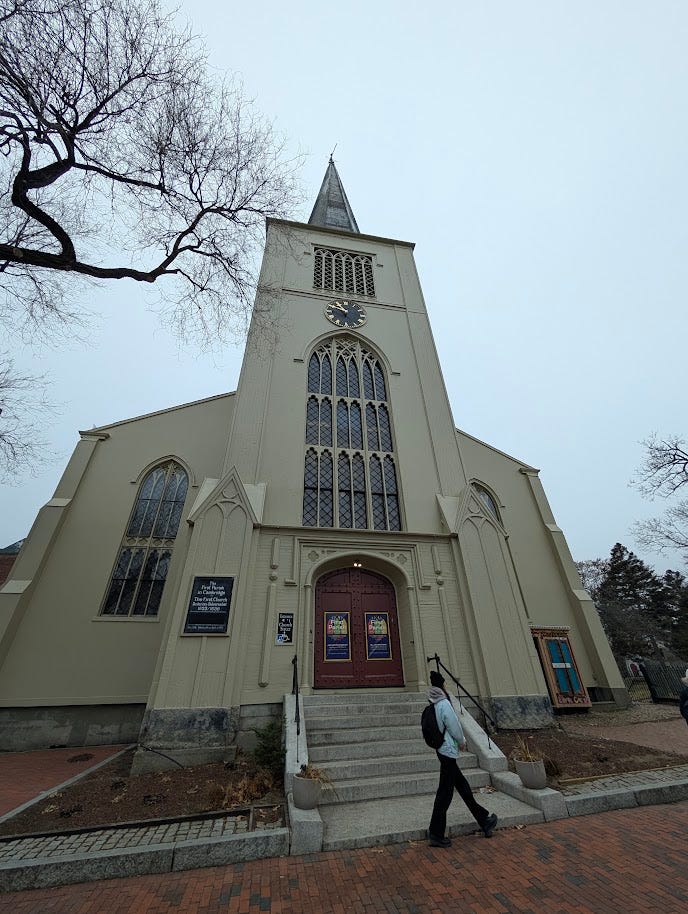
The decline of the mainline church vs. the rise of the evangelical church has been covered ad nauseam in the media for the last 30 years, so I will spare my audience the pleasure of my rehashing, but instead I will regale thee with what I am seeing on the ground. There is no shortage of church buildings available in every town you visit in North America. These churches once belonged to Christian, Protestants, and everything in between.
Many of the people that I have joined in communion have come from these institutions that built Western Civilization because they desire to leave the organization and join a living organism.
Ideas that come from the counter-culture movement, to be sure, but there is something to be said for the idea that our Western Civilization is truly in decline and we are living in the shadow of what once was, and the people are looking for a new way to reclaim the living breath that they feel is lost in the remnants of that civilization.
While some, such as YouTuber Redeemed Zoomer, want to reclaim the mainline, most people don’t have the patience for board meetings, synodal votes, and the inertia it takes to restore buildings that are no longer used to their full potential.
If Carrier’s air conditioning units encouraged home builders to ignore local vernacular styles in favor of cost-efficiency, then the Shure microphone encouraged the emergence of the “warehouse church.”
No longer requiring a building to complement a congregation's singing voices, microphones and speakers changed the practical needs of traditional church building, allowing enterprising churchpreneurs to innovate on the traditional church model.
While a new Christian model emerged from the warehouse church (complete with parking attendants, coffee, and a state-of-the-art sound system), these churches soon grew stale as their innovations stopped being innovative and became as “stale” as the “old model.”
What then? Well, at Abiding Church, focusing on building disciples vs. “building churches” has allowed for a sort of “American dynamism,” where Acts 2 serves as a blueprint overlaid with modern life. A reverence for the things of God is maintained, but a dinner table can be transformed into a da Vinci painting because the people are in true communion with their purpose for being there.
I applaud those who are sincere in their efforts to restore Christianity to something with a positive vision, but it will always be an uphill battle to restore something that others within your tradition simply do not believe in. For now, I have chosen the path that is less sexy within intellectual circles, but rarely requires me to colabor with those who would otherwise wish for my downfall.
All things worth doing require sacrifice, but a sacrifice put in its proper context. Communion has been held to be something sacred, something reserved for those who agree with you, not because we want to send people to eternal damnation for disagreeing with us- but because that is what it means to be in communion with one another.
A husband and wife cannot be in communion with one another if one’s heart lies with another lover. Not in any sort of healthy communion anyways. A soldier cannot fight effectively for his country if his loyalties lie with the enemy or even a neutral third party. So it would be logical for us to be in communion with those we would gladly share the body and blood of our risen savior with.
Hopefully this wasn't too long or argumentative. I have thought about writing a piece like this for the last two months, but it was not until reading Robin’s recent article and watching the press run for Bonnie Kristian’s defense of evangelicalism that I felt I should add something long-form to the internet discussion.
Christians can't build strong towns because Christian voters oppose spending tax dollars on infrastructure. Christians only want their tax dollars spent on bombs directed at Iranian girls schools